Speciation - How it works
Species and Speciation
The concept of species, discussed in the article devoted to that subject, is an extraordinarily complex one. Owing to limitations of space, that essay only hints at the many details, the competing schools of thought, and the varying definitions of species. Likewise, in the present context, it is possible to examine the concept of speciation only in the most cursory fashion. In addition to consulting the essay on Species for more information, the reader is encouraged to review the article on Taxonomy.
Taxonomy is the area of the biological sciences devoted to the identification, nomenclature, and classification of organisms according to apparent common characteristics. It uses a wide array of specialized rankings for grouping animals, but only seven of them are essential to most biology students. These seven, known as the obligatory hierarchy, are kingdom, phylum, class, order, family, genus, and species. In the case of mammals, it is also useful to refer to subphylum, which in this case is Vertebrata (see the classification of humans in Species), but for the most part it is enough for the beginning student to attain at least some mastery of the obligatory ranks.
Note that species is the most specific of these ranks, which is fitting, because species and specific come from the same Latin root, specie, or "kind." Nonetheless, it is difficult to define species beyond a reference to its place among the categories of the obligatory taxonomy. According to the biological species concept, discussed briefly in Species, a species is any population of individual organisms capable of mating with one another and producing fertile offspring in a natural setting. This is far from the only definition, however.
INTERSPECIFIC MATING.
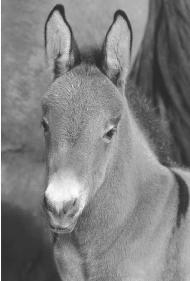
Occasionally, it is possible to produce an infertile hybrid, such as a mule, which is created by the mating of a male donkey and a female horse, or a hinny, the product of the less common union between a male horse and a female donkey. The infertility is due to genetic disorders that arise when mating takes place between distinct species, and even this imperfect product is possible only by mating two species that are very closely related. Donkeys and horses, for instance, both belong to family Equidae, which makes them very closely connected.
In the taxonomic ranking of humans, this would be equivalent to a human mating with a fellow hominid, or member of family Hominidae. If the long-extinct genus Australopithecus were
All of humans' close relatives are extinct, and today our nearest relatives are members of the order Primates: apes, monkeys, and marsupials. It is impossible to imagine a human mating with one of these animals and producing offspring of any kind. Likewise, it is extremely unlikely that a horse or donkey could mate with a tapir or rhinoceros, which are about as distant in relation to them as other primates are to us. (These species all belong to the order Perissodactyla, herbivorous mammals possessing either one or three hoofed toes on each hind foot. We discuss this group, along with all other mammalian orders, later in this essay.)
THE PROBLEM OF DEFINING SPECIES.
Although the biological species concept is accepted widely, it has its shortcomings, not least of which is the fact that not all species reproduce sexually. Although sexual reproduction is the case with a wide array of animals and even plants, quite a few organisms reproduce by some asexual means: for example, single-cell organisms reproduce by splitting.
Among the competing definitions of species is the phenetic (or morphological) species concept, which relies in part on common sense. According to the phenetic species concept, a species is the smallest possible population of organisms that consistently and continually remains distinct and distinguishable by ordinary methods of observation. There are also a variety of definitions that fall under the heading "phylogenetic species concepts," all of which maintain in one way or another that taxonomic classifications should incorporate the most widely recognized hypotheses regarding the evolutionary lines of descent that produced the organisms in question.
The Process of Speciation
Clearly, there is no hard and fast definition of species, but in general terms, everyone who has some familiarity with the concept has at least a basic knowledge of what does and does not qualify as a species. We will leave finer distinctions to trained taxonomists and other biologists and move on to a fact regarding which there is no disagreement: a wide array of species exists in the world today. Some estimates calculate the number of species in the five kingdoms—animals, plants, monerans, protista, and fungi (see Taxonomy for a very brief identification of each)—at about 1.5 million.
This is only the number of identified species, however. Other figures, based on the probable numbers of unidentified species in the world, put the sum total in the tens of millions. Whatever the case, it is obvious that over the course of evolutionary history (discussed in Evolution and Paleontology), there has been a widespread adaptive radiation—that is, a diversification of species as a result of specialized adaptations by particular populations of organisms.
Speciation events are described as either allopatric or sympatric. Allopatric ("different places") speciation occurs when a population of organisms is divided by a geographic barrier, a great example being the division of squirrel species caused by the formation of the Grand Canyon (see Evolution). Another example is the speciation of the black-throated green warbler, which today consists of one species in the eastern United States, along with three others in the western part of the country. Some scientists speculate that there may once have been a single species of black-throated green warbler, whose population was split by the formation of a glacier during the Pleistocene epoch. The latter was the period of the last ice age, which ended about 10,000 years ago, but the end of the ice age was a slow process. It may be that glaciers, formed in the latter part of that time, helped to separate what became three different western species.
Species share the same gene pool, or the sum of all genetic codes possessed by members of that species. The isolation of two populations slowly results in differences between gene pools, until the two populations are unable to interbreed either because of changes in mating behavior or because of incompatibility of the DNA between the two populations. (Deoxyribonucleic acid, or DNA, contains genetic codes for inheritance. See Genetics for more on this subject.) More rare than allopatric speciation, sympatric ("same place") speciation happens when a group of individuals becomes reproductively isolated from the larger population of the original species. This type of speciation typically results from mutation, or alterations in DNA that result in a genetic change.
Studies of three-spined sticklebacks, a variety of freshwater fish, in British Columbia have revealed what appears to be a fascinating example of sympatric speciation. Evolutionary biologist Dolph Schluter and others have discovered that the region contains two species of stickleback, one with a large mouth that feeds on large prey close to shore, the other with a small mouth that feeds on plankton in open water. Both species jointly inhabit five different lakes. Through DNA analysis, scientists have determined that the lakes were colonized independently by common marine ancestors, meaning that the process of sympatric speciation between the two varieties had to have occurred independently at least five times. This seems to indicate a situation of competition for resources that favored stickleback species at either extreme of size, as opposed to those of medium size and medium-sized mouths.
RATE OF EVOLUTIONARY CHANGE.
Closely tied to speciation is the rate of evolutionary change, or the speed at which new species arise. This is a long process, one that is usually not observable within a human lifetime or even the span of many lifetimes, though bacteria at least have shown some evolutionary change in their growing resistance to antiobiotics (see Infection). DNA analysis (see Genetics and Genetic Engineering for more about DNA) has been used to examine the rate of evolutionary change. To perform such analysis, it is necessary first to determine the percentage of similarity between the organisms under study: the greater the similarity, the more recently the organisms probably diverged from a common stock. Data obtained in this manner then must be corroborated by information obtained from other sources, such as the fossil record and comparative anatomy studies.
At certain times the rate of evolutionary change can be very rapid, leaving little fossil evidence of intermediate forms, a phenomenon known as punctuated equilibrium. This is contrasted with phyletic (that is, evolutionary) gradualism. Of course, the term rapid in this context is relative, since we are talking about vast spans of time. Life on Earth has existed for about 3,000 million years, and the fossil record goes back some 1,000 million years. This is the case, in part, because to leave fossilized remains, an organism must have "hard parts" that can become mineralized to turn into fossils. (See Paleontology for more on these subjects.)
Comment about this article, ask questions, or add new information about this topic: