Historical Geology - How it works
Explaining Origins
For thousands of years, humans were content to rely on religiously inspired stories, rather than scientific research, to provide an explanation regarding Earth's origins. This topic, along with the scientific challenge to those early accounts of Earth's formation, is discussed in considerable detail within the essay Earth, Science, and Nonscience. Other aspects of the subject, particularly the challenge to mythological explanations put forward by earth scientists in modern times, are examined here.
All religious explanations of the planet's origins can be called myths, which is not necessarily a pejorative term: a myth is simply a story to explain how something came into being. So pervasive are myths about geology that a term, geomythology, has been coined to identify such myths. Geomythology in particular and mythology in general stand in sharp contrast to scientific explanations derived by using the scientific method of observation, hypothesis formation, testing of hypotheses, and the development and testing of theories.
CONTRASTING SCIENCE AND RELIGIOUS GEOMYTHOLOGY.
Science and myth have in common the aim of explaining how things came to be, but the means by which they reach that explanation are quite different. So, too, are the reasons that drive science on the one hand and religion or myth on the other in seeking to develop such an explanation.
The most famous of all religious explanations of Earth's origins, of course, is that found in the biblical book of Genesis. Probably written in the latter part of the second millennium B.C. , it offered a compelling story of creation that virtually defined the Western view of Earth's origins for more than 1,500 years, from about A.D. 300 to the beginning of the nineteenth century. Its purpose, of course, was not scientific, and it was not written as the result of research; rather, the Genesis account depicts nature as a vast stage on which a cosmic drama of love, sin, redemption, and salvation has been played out over the ages.
By contrast, the scientific search for Earth's origins is driven merely, or at least primarily, by curiosity to explain how things came to be as they are. Scientists certainly have their biases and are just as capable of error as anyone, yet at least they have a standard in the form of the scientific method. If a scientist's findings, and the resulting theory, with stand the rigorous testing required by the scientific method, the theory is rewarded with increasing acceptance and new research designed to test further its ability to explain the world. If the theory fails those tests, its adherents may hold on to it for a time, but eventually they die off, and the theory is discarded. On the other hand, adherence to the religious explanation of Earth's origins has proved more intractable, as we shall see.
The Religious War Concerning Earth's Origins
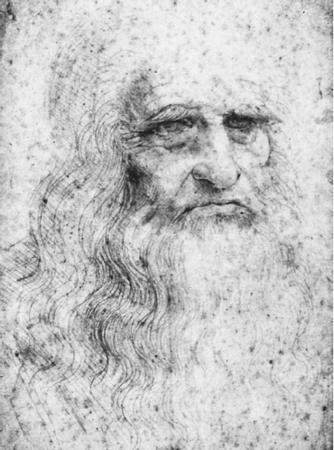
The great Italian artist and scientist Leonardo da Vinci (1452-1519) was among the first Western thinkers to speculate that fossils might have been made by the remains of long-dead animals. This was a daring supposition to make in the Renaissance, and it would become even more daring to uphold such an idea in the centuries that followed. The concept of fossils seemed to imply an Earth older than the biblical account suggested, and with the Catholic Church under attack by the forces of religious reformation (i.e., Protestantism) and other forms of "heresy," church leaders became less and less inclined to tolerate any deviation from orthodoxy.
The ecclesiastical view of Earth's history reached a sort of extreme in the seventeenth century, with the Irish bishop James Ussher (1581-1656). The New Testament contains a thorough accounting of Jesus' lineage, both through his mother and his earthly father, Joseph, all the way back to the time of Adam. Jesus was descended from David, whose lineage is provided in the Old Testament, complete with each ancestor's life span and the age at which he fathered a successor in the Davidic line of descent. From these figures, Ussher concluded that God finished making Earth at 9:00 A.M. on Sunday, October 23, 4004 B.C. Accepted by the Church, Ussher's calculation gave the idea of a very young Earth an aura of "scientific" justification.
Ironically, one of the first scientists to discover evidence that pointed toward an extremely old Earth was also a minister, the English astronomer Henry Gellibrand (1597-1636). While researching Earth's magnetic field, Gellibrand discovered that the field had changed over time (as indeed it has—for more on this subject, see Geomagnetism). This was one of the first indications that the planet's history can be studied scientifically, even though humans have no direct information regarding the origins of Earth.
Early Stratigraphic Studies
After Gellibrand came the Danish geologist Nicolaus Steno (1638-1687), who studied the age of rock beds. Thus was born the concept of stratigraphy, or the study of rock layers beneath Earth's surface, which revealed a great deal about the planet's age. (See Stratigraphy, which discusses many topics related to historical geology.) Along with the English physicist Robert Hooke (1635-1703) and others, Steno also became one of the first thinkers to confront the possibility that Earth must be much more than 6,000 years old.
During the eighteenth century, the German geologist Johann Gottlob Lehmann (1719-1767) built on ideas introduced by Steno concerning the formation of rock beds. Lehmann put forward the theory that certain groups of rocks tend to be associated with each other and that each layer of rock is a sort of chapter in the history of Earth. Aspects of Lehmann's theory were incorrect, but the general principle marked an advancement over previous ideas in geology and helped point the way toward a new view of the earth sciences.
Previously, geologic studies had tended to be qualitative and descriptive, meaning that earth scientists used very generalized terminology and failed to possess a grasp of larger issues. Thanks to Lehmann and others who followed him, the earth sciences became more truly quantitative and predictive, offering explanations of what had happened in the past, along with justifiable theories concerning what might happen in the future.
The German geologist Abraham Gottlob Werner (1750-1817) put forward a theory that was largely incorrect, yet one that nevertheless advanced the earth sciences. His "neptunist" theory was based on the idea that water had been the main force in shaping Earth's surface. Though this theory was not accurate, his idea was significant, because it constituted the first well-ordered geologic theory of Earth's origins and early history. At the same time, that history was turning out to be very long indeed.
Religion and Earth's Age
In 1774 the French mathematician Georges-Louis Leclerc, Comte de Buffon (1707-1788), applied new scientific ideas to the study of Earth and estimated its age at 75,000 years. Privately he admitted that he actually thought Earth was billions of years old but did not think that such a figure would be understood. At the time, after all, the concept of a "billion" was hardly a familiar one, as it is today. More important, the idea of Earth being that old was shocking and downright frightening to people who accepted a strict interpretation of the biblical account.
In an earlier century, the Italian astronomer Galileo Galilei (1564-1642) had been forced, on pain of death, to recant his support for the Polish astronomer Nicolaus Copernicus's (1473-1543) discovery that Earth is not the center of the universe. In Buffon's day, by contrast, few Europeans faced such dire threats for endorsing apparently unbiblical ideas. A scientist could still lose his job for supporting the wrong principles, and thus Buffon had to renounce his position on threat of losing his post at the University of Paris.
AN ATHEISTIC REACTION.
Other forces were at work in the sciences during the eighteenth century, and some were openly hostile to religious belief. An extreme example was the French physician and philosopher Julien de La Mettrie (1709-1751), a leading figure in the mechanist school of the biological sciences. La Mettrie maintained that humans are essentially a variety of monkey, to whom they were superior only by virtue of possessing the power of language. Moving far beyond the territory of science itself, he also taught that atheism is the only road to happiness and that the purpose of human life is to experience pleasure.
In the physical sciences, an interesting example of reaction to religious belief can be found in the case of the French mathematician Pierre Simon de Laplace (1749-1827). Like those of La Mettrie, Laplace's aims were not purely scientific; instead, he envisioned himself as a warrior against religious belief. Correctly enough, Laplace maintained that the origins of the universe as well as its workings could be explained fully without any reference to God. He also introduced a highly influential theory, widely accepted today, that the solar system originated from a cloud of gas. (See the entries Planetary Science and Sun, Moon, and Earth.)
Like La Mettrie, Laplace took his ideas far beyond their justifiable purview in the realm of science, however, wielding them as a sword in a religious war. Laplace maintained that because it was possible to discuss the origins of the cosmos without reference to God, there must be no God—which is far from a logically necessary conclusion. Misguided as La Mettrie's and Laplace's atheistic crusades may have been, they are historically understandable: in France, far more than anywhere in western Europe except perhaps Spain, the Church had come to be seen as a force of political oppression, allied as it was with the French royalty. It is no wonder, then, that the French Revolution of 1789 was directed as much against the Church as against the king.
Comment about this article, ask questions, or add new information about this topic: